
comics
All posts tagged comics
I’ve been a fan of the Punisher since I was a kid, probably because of the “one man army” action movie motif that started with First Blood. Seeing bad guys who are “above the law” get righteously gunned down is cathartic, too.
Punisher has seen a few different incarnations, but I never loved him more than in the late 80s and early 90s, when he was less of a generic do-gooder who happened to shoot people for a hobby. A one-man war on crime eats at a guy, and it’s eaten away almost every last scrap of Castle’s humanity. What’s left of it only occasionally comes out to remind him where he came from and why he does what he does: to punish those who victimize others, and to punish himself for failing to protect his family. But when you come right down to it, the best Punisher stories were 80s action movies with a military or crime garnish — the kind of stuff you’d expect to see on a TNT movie marathon.
Due to the short shelf life of a Punisher villain, the bad guys were often pretty generic. If they ever survived for a comeback, they were usually cartoon characters, like Jigsaw, Barracuda, or the Russian, which didn’t always quite fit the Punisher mold in my view: I always felt Punisher baddies should be as grounded in reality as Castle himself, plus when you feature an established comic baddie in a Punisher yarn, you KNOW he’ll always get away. With the more disposable bad guys, you were never sure: Castle might nail ’em, or they might come back to haunt him later. Either way, sometimes they were memorable for one reason or another despite being “throwaway” characters doomed to eat a bullet within two to five issues.
The following storylines are my favorites because they combine the above into great stories. I’ll add more as I stumble upon them. Sometimes I give what I believe to be the official title of the storyline; other times, if the chapters each have unique titles, I’ll choose the most relevant one to encompass the whole story; still other times I’ll just invent a title myself.
Oh yeah, probably spoilers. Heads up.

The Ghost of Wall Street
(Punisher #8 and #9)
Punisher tries to nail a Zaibatsu CEO and his American cohorts for insider trading; meanwhile a serial killer runs amok killing Wall Street’s hoboes. Turns out the two are more connected than Castle realized, but our man takes down white collar crooks the way lower-class Americans would love to see them taken down. This is the arc where Micro actually loses his son and cements his role as the Punisher’s sidekick.
It’s refreshing to see the Punisher butt heads with white collar crooks instead of the usual mafia or ganger fare. The featured bad guy Sijo is a menacing dude, a silent bodyguard/assassin who’s as tough as Godzilla and almost as big. He’s reminiscent of Professor Toru Tanaka in The Perfect Weapon: a big, bad bruiser who can crush people’s skulls with his bare hands. He gets a particularly gruesome death in a gravel crusher for killing Micro’s boy. His sidekick, coked-up insider trading prodigy Roky Vance, is a memorably creepy douche with a fetish for killing bums.
Fortress Miami
(Punisher #89 through #92)
While Punisher hunts for a Jamaican drug lord, he stumbles onto a plot to rescue South American dictator General Carranza from his American prison before he can stand trial. Despite a staggering body count, Carranza escapes on his plane and mocks the vigilante as he flies back to his home country, Bosqueverde. For a while Punisher considers him lost, but a news report informs him that the dictator is chilling in his jungle villa, pretending to be under arrest. From there the story becomes Predator as the Punisher stalks through the jungle, killing Carranza’s mercenaries one by one.


This four-issue arc is reminiscent of pre-Comics Code military comics, back when war was hell and death was gruesome and vividly narrated — see Castle’s description of one soldier’s sucking chest wound. You almost feel bad for Punisher’s marks: they don’t stand a chance. Only Rabio and his mercenaries ever have a clean shot at the Big P, but he quickly turns the tables on them and plays some guerrilla games that even John Rambo would call fucked up. Definitely features some of Frank Castle’s baddest kills.
The artwork in this tale is superb, especially the environments. You can feel the humidity as Castle stalks through the jungle, or the frigid embrace of the ocean as he goes to work in a frogsuit. The most memorable baddie is definitely Carranza, basically a suave and handsome Manuel Noriega, who constantly throws his weight around like he’s got the biggest cojones on planet earth and nobody can touch him. His death via helicopter minigun is nothing short of spectacular.
The Killing Streets
(Punisher #93)
I can see Thomas Jane turning this one-shot street justice tale into an awesome short film. An adolescent boy named Gonzalo is fed up with his barrio being ruled by the Razors, a brutal street gang that has been extorting the neighborhood. He starts hanging up posters asking the Punisher for help. Punisher agrees to handle the situation with a clever disguise and some choice gunplay for the finale.

One memorable character is the tie salesman who stands up to the Razors and beats the hell out of them more than once. The kid believes him to be the Punisher in disguise, and is devastated when the gang’s leader cuts him down. Turns out the Punisher was casing the situation all week before making his move on collection day, when the neighborhood pays their protection money — makes me wonder if the Punisher was in the john when this poor salesman got whacked. Beyond that minor gripe, it’s a solid urban western.
The bad guys really aren’t even a challenge to Castle here. Wiping out a street gang is the sort of thing he would do nonchalantly on his way home from picking up groceries or doing laundry. What makes it interesting is that this little kid reached out to him for help, basically committing contract murder at age nine. It shows that Castle is kinda like a really brutal Superman: no innocents are too insignificant to help.
Johnny Tower
(Punisher: War Zone #1 through #6)
The War Zone series kicks off with a real bang. In order to bring down the Carbone crime family from the inside, Punisher enlists the help of Carbone stooge Mickey Fondozzi and poses as his cousin from Kansas City: the big, imposing Johnny Tower. The Punisher has a field day with this mission: by day he’s Johnny Tower, obliterating rival mobs and destroying their rackets so the Carbones can’t take them over; by night hes the Punisher, using his inside info to whack Carbone operations. It’s all fun and games until he’s outed and handcuffed to a car with five pounds of plastique in the passenger seat. I had to wait a decade before I would finally collect the missing issues and find out how he escaped and destroyed the Carbone outfit.

Johnny Tower is a great Punisher story all-around, if you can forgive the terrible Liefeld anatomy and unnecessary Liefeld-esque sideways two-page spreads. Where the anatomy fails, the mood and environment succeeds with flying colors: in particular, the sequence of Punisher shadowing Micro to a mysterious appointment oozes atmosphere and tension. The Micro subplot is one of the better ones, and resounds throughout this story arc and its follow-up.

The Carbone brothers are what you would expect for Italian mafia dons, but they’re distinct from one-another: Julius being a dandy patriarch in contrast to Sal, the big, brooding former enforcer. The star gangster of the story, though, is Mickey the Dumbass: a common hoodlum who’s in over his head, both as a Punisher sidekick and a wiseguy climbing the mafia food chain. His recruitment is where the Thomas Jane film got the brilliant popsicle interrogation scene. Honestly I wish this had been the plot to that movie instead of a hammy origin story (as much as I liked Howard Saint, Harry Heck, and the three outcasts in the apartment). There’s also a guy named Shotgun who only vaguely factors into the goings-on of the plot, and whose equipment is a bit over-the-top even for a Marvel comics story. He lives up to his namesake at least, specializing in combat shotguns and using a wide variety of custom ammunition to bring the house down around his targets.
The Magnificent Seven
(Punisher: War Zone #7 through #11)
After leaving a smoldering crater where the Carbone syndicate once stood, the Punisher goes on vacation…and by that I mean he goes hunting a serial rapist in Central Park (with the help of a very sexy policewoman). In trying to run down the rapist, he discovers that Rosalie Carbone — daugher of the late Julius, the new head of the Carbone mob, and Johnny Tower’s spurned lover — has hired the seven deadliest contract killers in the world to hunt him down for a million-dollar prize. Issue 2 has the best cover of the series, pictured below in all its rainy glory.

This story is nonstop action, and I can’t fault it for that. The seven killers are all distinct from one-another, though I wish they’d been given more creative handles: Garrotte kills with a garrotte, Stiletto kills with stiletto knives, Combat kills people with martial arts, etc. My favorite is Cane, the old gent with an arsenal of weaponized walking sticks. He’s the smartest and most experienced of the lot, mostly hanging back and letting the others get killed. Rosalie has a great introduction, indignantly storming into a Carbone capo meeting and taking over the organization that’s rightfully hers. From there she becomes mostly comic relief, as she quickly reverts to the pampered, mall-hopping brat she was in the Johnny Tower arc. She doesn’t know or care that she’s totally unsuited to the task of running a criminal empire. I guess even in the underworld, the idiots always get to be in charge.


I also love Castle’s pretty cop sidekick, Lynn Michaels. She takes the vigilante thing in stride and looks great in jogging gear. She appears on and off again throughout the comic series and begins to embrace the vigilante thing more fully, eventually taking the Punisher’s place in later storylines (temporarily at least). She even gets her own skull-torsoed getup!
Psychoville
(Punisher: War Zone #12 through #16)
Just as the Punisher is bearing down on terrified mobster DaRosa, both men are seized by mobs of pedestrians. The next thing Frank Castle knows, he’s living a happy suburban life with a wife and two kids. He’s been added to a small city full of psychotics and killers, all brainwashed by Dr. Shane to be sleeper agents for political assassinations.

Frank’s conditioning is fun to watch unravel bit by bit, as seemingly insignificant things nag at his subconscious, trying to remind him who he is. Most striking of all is the memory of the terrifying, grinning hitman who mowed down his family. When he finally snaps out of it, his resulting killing spree wakes up the rest of the townsfolk, and bedlam sweeps across the phony city. It’s all pretty glorious.
I only have a couple complaints about an otherwise brilliant Punisher story. The twisted Dr. Shane isn’t memorable on his own: he’s a generic mad doctor, and a mild-mannered one at that. But his awesome assassin program makes up for it. The other complaint is that Castle’s kids turn out to have the most cartoonishly evil rap sheets once their identities are revealed. The girl murdering her foster siblings, okay, but burning down a petting zoo and a nursing home, too? Come on, guys, a little subtlety wouldn’t hurt.
The issue covers are probably the best part, depicting a very rigid Castle doing everyday suburban shit: watching TV with the fam, mowing the lawn, etc, looking like he’s being forced against his will to live the American dream. Which of course he is.
Sweet Revenge
(Punisher: War Zone # 26 through #30)
Hot on the trail of Caribbean gun runners, Castle travels from the Florida Keys to the fortified country of Puerto Dulce…which is on the eve of a violent revolution. There he meets rich, despotic siblings Ernesto and Carmelita Villamos, one of the five families who are basically keeping their people in poverty (hence the revolution). Outed by the sexy sister, Punisher is shipped off to a brutal sugar cane field where he is worked nearly to death from sunrise to sunset, and forced to fight other workers for the fat pit boss’s entertainment. Micro recruits an old buddy, Ice, to rescue Castle and flee the country before the revolutionaries raze it to the ground.

What makes this story stand out is the sheer amount of awful shit Castle goes through. He bakes under the hot sun while cutting razor-sharp cane that dices his feet to ribbons. He’s fed maggoty food and dysentery-inducing water. He develops a fever and is beaten by the guards frequently. The heat and misery of Puerto Dulce is palpable with every page, and you suffer right along with the heroes. It’s a great way to get the reader to root for them to escape at any cost. The action sequences are top notch, too, including a battle with some hungry crocodiles, and a great skirmish with some camping soldiers. The art style is gritty and makes everything look worn and haggard, and the anatomy is better and more dynamic than the Liefeld art style of the Johnny Tower story. Castle has a striking resemblance to Charles Bronson that doesn’t go unappreciated.

Watching the fall of the Villamos clan is cathartic as hell, too. Their bad karma thwarts their attempts to flee their dying regime at every turn. Nothing goes right for these two pampered assholes, and when faced with the brutal justice of the revolutionaries should they be caught, they opt for double-suicide instead, which is probably more satisfying than if Castle had nailed them, himself.
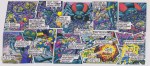
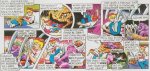
One of the many cool things about Mighty Max was that each playset had a comic dramatizing the action on the back of the card. This very cool Flickr group has preserved most of these in digital form, as has the awesome French Mighty Max wiki. I’m posting them here partly to help preserve them (in case one of our sites goes offline someday), and partly because it’s a pain in the ass not being able to view all of these in one place.
Unfortunately, while the wiki does have almost all of the comics, it failed to keep the “The Story So Far” text box preceding each, which provided the context for the adventure. So the comics feel more like non-sequiturs than they normally would.
DOOM ZONE COMICS



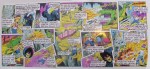
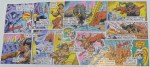

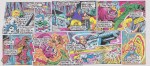


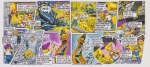
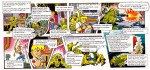


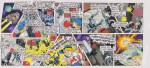
HORROR HEAD COMICS


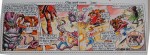

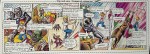


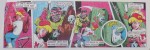
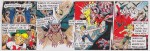

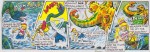


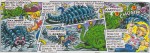
BATTLE MAX COMICS
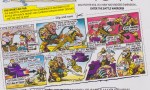


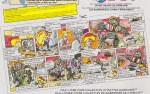
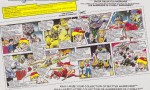
Sadly it seems no one preserved the comics from the big playsets. Shame.

Daddy’s Girl has concluded, and can now be read in its entirety. No news yet if I will make a print version, or migrate the comic to a webhost where somebody might actually give a shit about it.
In the meantime, I joined the Line Webtoon Sci-Fi Comic Contest, where user votes (unfortunately) determine who wins the grand prize. Check out my entry, Slave Life!

These are comics that inspired me as a comic artist/writer, and comics I just think are a blast to read for one reason or another.
Usagi Yojimbo by Stan Sakai. A taste of samurai cinema in the form of a sword-slingin’ rabbit. This comic could get anyone interested in Japanese chanbara films and tv shows, which are awesome.
Hellboy by Mike Mignola. Not exactly obscure, this one. If you have a love of mythology, Hellboy is for you.
The Amazing Screw-On Head by Mike Mignola. Probably the funniest comic I ever read.
Punisher: War Zone. This iteration of the Punisher will always be the real Frank Castle to me, first published in 1992. The popcicle-blowtorch scene from the Thomas Jane Punisher was a key scene in Issue #1, and one of my favorite moments. Still trying to collect the series. However…
The Punisher: The Killing Streets (Punisher vol. II, no. 93, 1994) by Chuck Dixon is my all-time favorite Punisher tale, about a young kid who “hires” Castle to relieve his barrio of a growing street gang.
Batman – Spawn: War Devil by Dough Moench, Chuck Dixon, Alan Grant, and Klaus Johnson. It really doesn’t take four people to make a better Batman-Spawn crossover than Frank Miller, but these guys did it anyway. And it’s far superior. Don’t read Miller’s, for god’s sake; read this one instead. You’ll thank me later.
Seven Block by Chuck Dixon and Jorge Zaffino. An obscure horror comic with some creepy visuals that would’ve made a neat movie…if anyone had ever heard of it, that is.
Bubblegum Crisis: Grand Mal by Adam Warren. I think he did Bubblegum Crisis better than Kenichi Sonoda. Certainly made it less sleazy…or at least made the sleaziness part of Neo-Tokyo culture rather than pure fan service…
House on the Borderland by Richard Corben and Simon Revelstroke. A comic adaptation of William Hope Hodgson’s novel of the same name, and one that would have made Classics Illustrated cry tears of jealousy. Which reminds me…
Classics Illustrated. Great way to get kids interested in classic lit, even if the art was sometimes hideous.
The Mask by John Arcudi and Doug Mankhe. Imagine if the Jim Carrey movie had been directed by Eli Roth and you’ll have some idea what the source material was like. Moviegoers really missed out, man (not saying Eli Roth is a good director, though, don’t get me wrong).
Valiant Comics’s Super Mario Bros Comic System. I ate these up as a kid: they were filled with odd humor that was unusual to find in a kid’s comic, and presented itself almost like a comic book variety show, with joke ads and PSA’s in-between episodes. Classic stuff.
Black Magic by Masamune Shirow. The William Gibson of the comic world takes his first foray into the world of sexy cyber-fantasy comics, and the manga world is forever changed. Brilliant little story about the death of life and society on Venus, and the birth of Earth as we know it.
Appleseed by Masamune Shirow. Unlike the rest of Shirow’s works, this one doesn’t get ultra-philosophical and features two protagonists who are approachable and truly likable. If you only read one comic by Shirow, make it this one.
Cerebus the Aardvark by Dave Sim. The granddaddy of independent comics (Elf Quest is the grandmammy). All the animal hero parodies started here, with this spoof of Conan.
Dick Tracy by Chester Gould. Also hardly obscure, but I feel Tracy is under-appreciated these days, overlooked in favor of the big bad bat who stole his gig and sullied it with a sillier costume. Unfortunately classic Tracy stories are tough to come by these days.
Bardic Press’s Mythography. A neat anthology comic that might have lasted only an issue or two (my memory’s hazy). Includes a really cute sci-fi story called Mystery Date, where a dumb college girl tries to sex up her teacher for a passing grade…and her teacher is an alien.
Excel Saga by Rikdo Koshi. Don’t bother with the anime, seriously. Completely different animal. Like the difference between The Big Lebowski and Dude, Where’s My Car? Worst of all, the anime omits a character so important to the cast’s dynamic it’s like making a Three Stooges short without Curly!
Urusei Yatsura and Ranma 1/2 by Rumiko Takahashi. Twice this wonderful, wonderful lady proves herself the Queen of the Tragic Protagonist. Nothing ever goes right for these characters, and it’s only their own fault half of the time; the other half it’s just cruel fate mocking them. All her characters are assholes and lunatics, but somehow you find yourself rooting for them anyway.
FLCL by Hajime Ueda. The ultimate puberty metaphor, minus the arbitrary J-pop soundtrack. It’s darker than the anime, too, and I think this version’s ending is more appropriate.
Hyper Dolls by Shimpei Itoh. Hilarious stories about a pair of OP’d super heroines who are often bored with their job. Like Excel Saga, the manga is a completely different animal than the anime — the Hyper Dolls themselves even have their personalities completely changed!
Tomie by Junji Ito. This author has a knack for frightening imagery, but his stories and concepts are pretty silly most of the time. Not with Tomie: this girl is an undying catalyst of envy and depravity, and wherever she goes, terrible shit follows.
Creature Tech by Doug Tennapel. The creator of Earthworm Jim spins an interesting and often humorous tale about alien parasites that bestow superhuman powers, with a nice “will science and faith stop fighting already?” message. Also, giant space eels.
Marvel’s Secret Wars. The first major comic universe crossover epic. Worth checking out if you’re into that sorta thing. Includes the introduction of Black Spider-Man via the Venom symbiote.
Maus by Art Spiegelman. Poignant and unsettling biographical comic about the holocaust. Just ‘cos they’re animal people doesn’t mean it’s Ninja Turtles — get ready for some heartbreaking stuff.
Shirahime-Syo by CLAMP. Speaking of heartbreaking, here’s a handful of Japanese folk tales that’ll make you cry rivers. Very sad, and very Japanese.
Understanding Comics by Scott McCloud. More of a textbook than a comic, this masterpiece really kickstarted my serious foray into comics. It has two sequels: Reinventing Comics and Making Comics.
You Are Here by Kyle Baker. Amusing noir tale about an ex-thief whose past catches up with him in the form of a pissed off Robert Mitchum lookalike. Not for kids.
The Cowboy Wally Show by Kyle Baker. Brilliant mockumentary comic about the career of a fictional television star.
Eastman and Laird’s Teenage Mutant Ninja Turtles. I loved the cartoon as a kid, but once I was exposed to the first TMNT film — and then the comics it was based on — I never went back. Original TMNT is as badass as it is silly, and better than that awful cartoon in every way.
Golgo 13 by Takao Saito. The James Bond of the manga world…sorta. Duke Togo is the ultimate badass, and don’t let anybody tell you different. Don’t watch the animes: they dumbed it down to idiotic “exploitation film” material. The live-action films, by contrast, were much truer to the source material.
Nightmares and Fairy Tales by Serena Valentino and FSc. Wonderful anthology of twisted modern fairy tales which seems to have gone horribly overlooked.
Arcane Comix’s Fly in my Eye. Horror lovers need to get their hands on this anthology comic, which features art by Clive Barker and a brilliant sci-fi story about a lady murdering her clones (created by her crazy ex-husband).

I decided to revisit my review of A History of Violence after reading it cover-to-cover for the second time, producing this newer, more accurate, hopefully more insightful draft. This comic is actually worse than I remembered it, and I’m sure many people will hate on me for hating on this story. I’ll try not to lose too much sleep over it.
Spoilers ahoy, but trust me you aren’t missing anything if you haven’t seen or read A History of Violence prior to reading this review.

Synopsis
Two criminals kill a couple hitchhikers on their way into Smalltown, USA, and try to hold up Tom McKenna’s diner, but they end up with more than they bargained for when Tom kicks their asses in such a big way that only one of them leaves the scene alive. Naturally, this attracts a hefty bit o’ press, to the chagrin of the McKenna family.
The media coverage leads to more problems as a semi-retired one-eyed mob hitman and his two young cronies begin stalking Tom and pestering his family. The hitman, Torrino, swears he recognizes Tom from his past, but he isn’t sure, and the last thing he wants to do is take loads of heat for killing the wrong guy (and his family). When he sees Tom’s son, Buzz — pretty much a spitting image of Tom in his younger days — Torrino is convinced he’s after the right guy. He takes Buzz hostage and forces Tom into a standoff on his front lawn that ends very badly for the mobsters, leaving the cronies dead and Torrino in a coma. McKenna: 3, Criminal Element: 0.
From there it gets even worse, as Tom has no choice but to come clean with his wife and kids regarding his mysterious past. When he was young, his friend Ritchie suffered a tremendous loss: his brother was popped by Manzi (Torrino’s boss) for being a dumbshit, and Ritchie was pretty bitter about it.
Bitter about his brother getting killed, that is. He already knew he was a dumbshit.
He and Tom made a hearty purchase of tear gas and uzis, killed the crap out of Manzi and all his men on Extortion Money Collection Day, then jacked the money and split it between them. Torrino showed up too late to kick ass, but did manage to get a good look at the two kids. Torrino hunted down Ritchie and tortured him into giving up Tom, who was a little more slippery than his unfortunate pal. Tom lost a finger, Torrino lost an eye, and both lost track of each other for twenty years until the whole diner holdup thing at the beginning.
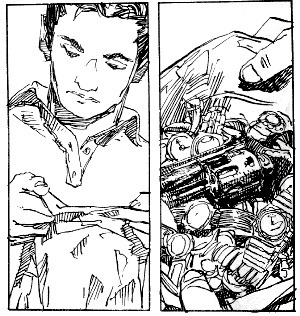
After telling his family about who he really is, Tom finds out Torrino was killed in his hospital bed, and he keeps getting calls from Torrino’s new boss, Manzi Jr. It turns out Ritchie is still alive, and Manzi has been torturing him for twenty years. Tom goes to Junior’s torture pit and kills his men in a series of out-of-left-field gruesome scenes I’d expect to see in a horror comic. One guy slowly and inexplicably gets his hand snipped off by an elevator, then runs out of the building and cusses at/bleeds on anyone who refuses to help him get to a hospital. Meanwhile Tom busies himself crushing another thug under a giant concrete pipe like a bug under his shoe. After getting an eyeful of the limbless, burn-covered horror show Ritchie has become, Tom gets the shit tortured out of him by Manzi Jr. before getting his second wind and causing Junior to accidentally chainsaw his own head off. Tom puts Ritchie out of his misery at long last, shortly before he’s wheeled away by the paramedics.
Reflections
A History of Violence was written by John Wagner and drawn by Vince Locke. Unfortunately the story is a poorly executed neat idea and looks like a life drawing student’s sketchbook. Bad for the art, worse for the writing. Wagner also writes Judge Dredd, so it’s no wonder why I didn’t like this graphic novel. I find Judge Dredd to be asinine as well, but I can recognize and applaud all its good points — it’s classic literature compared to this brain-breaking waste of ink.
Other than the fact that he insists on starting each chapter with some pretentious philosophical quote just like every other goddamn “gourmet” comic person, here’s my major complaint: an excerpt from the book’s introduction, written by Wagner, word-for-word, that proves what a poor writer Mr. Wagner really is:
“Ordinary people caught up in extraordinary situations. No muscled Arnies, no dirtied Harries, just normal people – you and me. The guy next door. That’s the fascination. Put yourself in their place, wonder what you’d do, how you’d react – and be grateful that particular bombshell didn’t fall your way. But it could have. Don’t kid yourself, it could happen to you, anytime. Right out of the blue.”
Yeah, don’t kid yourself, life’s unpredictable. One minute, you’re a regular person with a job and a family. Then right out of the blue, you suddenly discover that you’re a mass-murderer with the mob on your trail!
Let’s come back to reality for a second. If Wagner’s whole premise for this book was “ordinary folks in extraordinary situations”, that means Torrino should not have found the right guy — Tom McKenna should have suffered through terrible ordeals because of someone else’s past, a la El Mariachi or any number of Alfred Hitchcock films. The fact that Tom McKenna was the right guy after all mean he’s not so fuckin’ ordinary, and thus Wagner failed miserably at what he was trying to accomplish.
But taking the failed “mistaken identity” theme out of the picture, the story is still a ridiculous mess — three different comics from three different genres that Wagner crudely stapled together and called a graphic novel. It starts as a dull thriller with mob guys harassing McKenna, who may or may not even be the guy they’re looking for. Then as McKenna reveals his past it turns into “heist gone wrong” with the young boys running around town, buying uzis and planning their hit on Manzi Sr., then getting hunted down and punished for it. Finally it swan-dives into Eli Roth territory, with Ritchie having been tortured for twenty years and reduced to a quivering heap of meat, and Manzi Jr. being a big-time torture connoisseur, and the climax with all the laughably and unnecessarily gruesome gangster deaths at McKenna’s hands.
The art is often a problem while reading: sometimes it’s very hard to tell one character from another, unless they have a very distinct set of physical traits — sunglasses and black jacket, or devil goatee, or missing a fucking eye. I can read an Eastman and Laird Ninja Turtles comic and tell the turtles apart based on their personalities, despite their looking identical; in A History of Violence, I could never tell Young Ritchie and Young Tom apart unless they were referring to each other by name. A few faces were consistent enough to recognize easily, but this comic is hardly Locke’s finest work. Ultimately, though, the art is hardly the biggest issue with this comic: what sinks it is the general storytelling incompetence and side-order of pretentiousness.
Favorite Character – Torrino, the hatchet man. He’s really the only one that’s interesting and distinct, and he looks like Ed Harris mixed with Clint Eastwood. That’s the coolest DNA combo you could ask for.
Defining Plot Element – The fact that Ritchie was tortured for twenty years instead of being killed. Se7en barely kept me watching with the Sloth victim being tortured for one year. No other element killed the story faster than this one.
Final Thoughts – Stick to Judge Dredd or Sandman. This pile of slag doesn’t deserve the praise it gets.
 Mike's Toybox